

WellBalance Publishes Research Revealing the Wellbeing Signals of Burnout that Span Work and Life
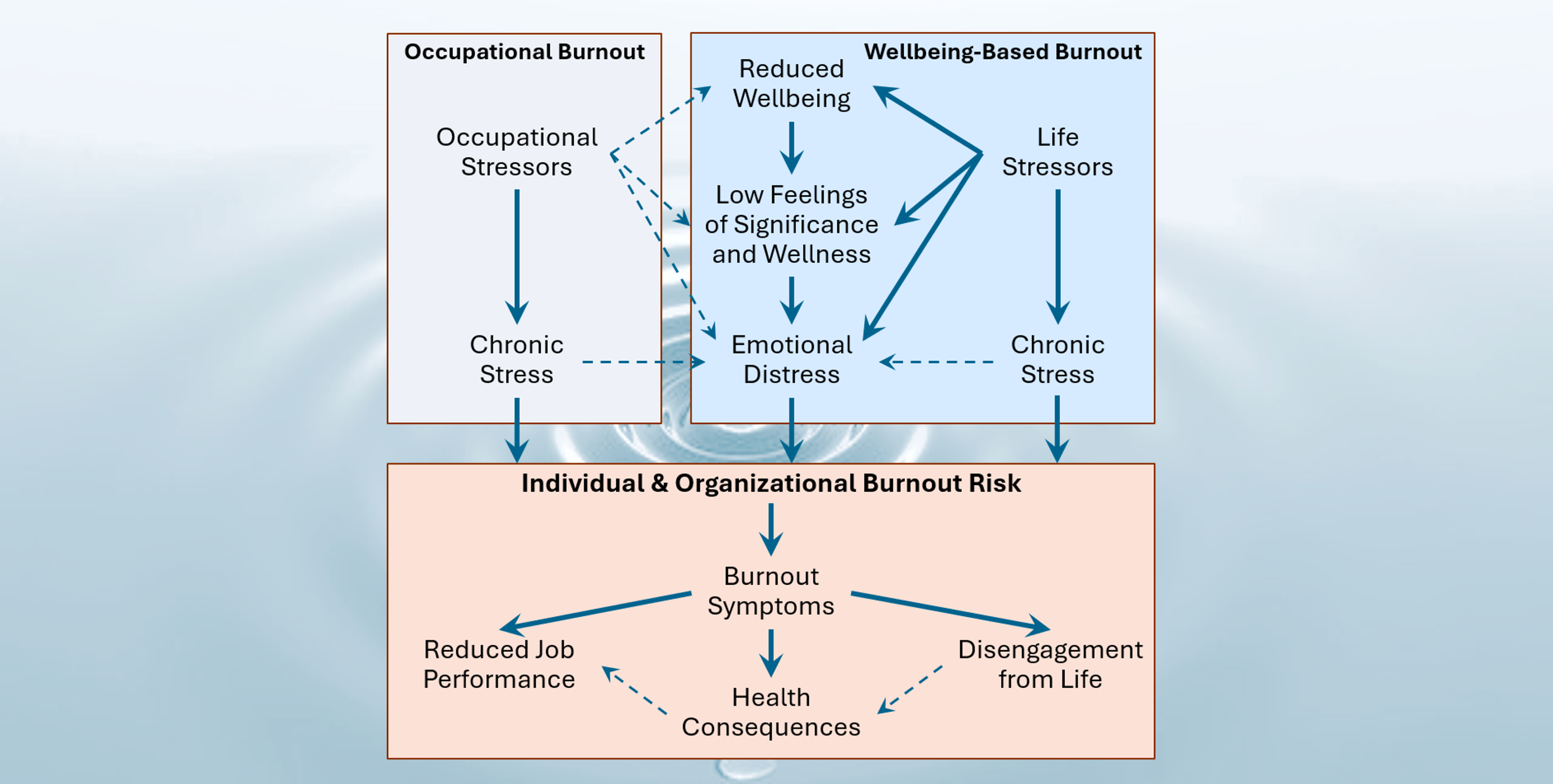
A unified wellbeing-based model of burnout risk: Alternative pathways to burnout and its consequences
Peer-reviewed research identifies low feelings of significance and wellness with emotional distress as key predictive signals of burnout risk for employees
LAGUNA NIGUEL, CA, UNITED STATES, August 31, 2026 /EINPresswire.com/ -- WellBalance today announced the publication of new peer-reviewed research that challenges the traditional view of burnout as a phenomenon limited to the workplace and introduces a broader, wellbeing-based model of burnout risk across work and life.
The chapter, “Wellbeing Signals of Burnout Risk: How Feelings of Significance, Wellness and Emotional Distress Shape Functioning Across Work and Life,” appears in the IntechOpen book Psychology of Happiness and Wellbeing – Theories, Practices, and Global Perspectives. The research draws upon two empirical studies including more than 700 employees that examined the wellbeing factors most closely associated with burnout vulnerability among working adults and a broader U.S. population.
The research identified two wellbeing factors most closely associated with burnout risk including feelings of Significance, encompassing mattering, belonging and feeling valued, which were as closely associated with burnout vulnerability as feelings of Wellness, including vitality, fulfillment and serenity. A concise six-item measure combining these factors demonstrated promising screening utility for identifying employees at elevated burnout risk.
Additionally, the research revealed that life situations can be as closely associated with burnout as working arrangements, stressful life events outside of work are one of the most significant contributors to burnout, and emotional distress is a strong signal that the cumulative demands of life and work have overwhelmed an individual’s capacity for stress.
A Wellbeing-Based Path to Burnout Across Life and Work
Together, these findings support a whole-life wellbeing-based model in which burnout can emerge from chronic workplace stress, stressful circumstances elsewhere in life, erosion of meaning and mattering, poor self-care and wellness, or combinations of these factors.
The research therefore expands upon the World Health Organization’s ICD-11 definition of burnout as an occupational phenomenon resulting from poorly managed chronic workplace stress. These studies indicate that life circumstances and eroded wellbeing beyond work can contribute to burnout vulnerability and impaired functioning across both work and life.
“As the line between our work and life continues to blur, we carry our stress between them,” said Troy W. Norris, Founder and CEO of WellBalance and a co-author of the research. “Whether formally employed or not, someone may struggle from unsustainable demands, neglected self-care, emotional distress due to life events, or because they no longer feel that what they do has meaning or that their efforts matter. Burnout symptoms may appear similar on the surface but require very different solutions.”
The Right Burnout Intervention Depends on the Root Cause
These research findings have direct implications for employers because people experiencing similar burnout symptoms may require very different support. The research cautions that applying the wrong intervention can sometimes worsen the underlying problem.
An employee overwhelmed by chronic occupational stress may need workload reduction, greater autonomy or job redesign. And someone experiencing emotional distress from caregiving, relationship strain or even positive stressful life events such as a marriage or birth, may benefit more from flexibility, recovery time or supportive resources.
An employee feeling insignificant or disconnected from meaning may instead benefit most from greater purpose, belonging, recognition, or opportunities for meaningful contribution. Relieving these employees of demanding yet highly meaningful responsibilities could inadvertently reduce feelings of significance by withdrawing an important source of purpose and mattering.
This creates a new organizational imperative to understand the often hidden drivers of burnout before deciding how to address them. WellBalance’s research suggests that confidential and timely screening for upstream wellbeing signals of burnout risk can help employers detect emerging vulnerability and identify patterns of risk before these appear as disengagement, absenteeism, reduced performance or turnover.
Connecting Wellbeing Science with Organizational Performance
This publication marks an important evolution in WellBalance’s research program. The research applied WellBalance’s Wellbeing Balance and Lived Experiences (WBAL) Model, which provides a granular view of the positive experiences and feelings that contribute to subjective wellbeing, which has been validated against gold-standard measures of wellbeing and flourishing.
This novel experiential model of positive wellbeing is now enabling a deeper understanding of the human drivers of organizational effectiveness, including burnout, engagement and sustainable performance. Through enterprise-wide mapping and monitoring of these human factors that drive business outcomes, organizations can more effectively tailor and efficiently target their leadership development and employee assistance investments to address root causes and support executives and employees at greatest risk.
About WellBalance
WellBalance provides personalized wellbeing assessments, plans and resources for individuals and their coaches, and wellbeing intelligence for organizations to map, monitor and manage the human factors that drive sustainable performance and business outcomes. Applying its validated WBAL Model of Positive Wellbeing, the WellBalance Institute for Positive Wellbeing conducts research into the wellbeing drivers of burnout, engagement, and wellbeing across work and life and translates those insights into practical, personalized and actionable solutions for human flourishing and performance.
For more information, please visit www.WellBalance.org.
Read or download the publication at https://doi.org/10.5772/intechopen.1016785
Troy W Norris
WellBalance, LLC
info@WellBalance.org
Visit us on social media:
LinkedIn
Instagram
Facebook
YouTube
TikTok
Other
Legal Disclaimer:
EIN Presswire provides this news content "as is" without warranty of any kind. We do not accept any responsibility or liability for the accuracy, content, images, videos, licenses, completeness, legality, or reliability of the information contained in this article. If you have any complaints or copyright issues related to this article, kindly contact the author above.
